

The three costs of a robot on your desk
Every robot here has three prices, and only one of them is printed on the box. Money is the easy one to compare. Attention is the one you pay every day. Privacy is the one you only think about afterwards. None of these products is simply "expensive" or "cheap" — each is a particular mix of all three, and the mix is the thing worth shopping for.
The cost in money
Sticker price is the wrong number whenever a subscription is involved. Here is hardware plus 36 months, using annual billing where a discount exists — the charitable reading for anything with a recurring fee.
| Device | Hardware | Subscription | 3-year total | Own it after? |
|---|---|---|---|---|
| Vector 2.0 (annual billing) | $199.99 | $99.99/yr | $499.96 | Keeps the shell, loses voice + ChatGPT |
| Vector 2.0 (Claude backend) | $199.99 | $139.99/yr | $619.96 | Keeps the shell, loses voice + ChatGPT |
| Vector 2.0 (monthly billing) | $199.99 | $11.99/mo | $631.63 | Keeps the shell, loses voice + ChatGPT |
| Loona | $499 | None | $499 | ✓ fully |
| EMO Go Home | $369 | None | $369 | ✓ fully |
| EMO | $279 | None | $279 | ✓ fully |
| AIBI | $199 | None | $199 | ✓ fully |
| Eilik | $169.99 | None | $169.99 | ✓ fully |
| Pixl Nub (VIP) | $200 all-in | None | $200 | ✓ forever — shipping & tax included |
Where the money crosses over
Loona is the second-most expensive row in the table at $499 once, with no subscription. Only Vector's three-year total passes it, and only because the AI fee keeps accruing: roughly $500 over three years on annual billing, or $631.63 billed monthly.
Everything else here is well under half of Loona's price: EMO $279, Pixl Nub $200, Eilik $169.99. If budget is what pushed you off Loona, the desk-sized category is dramatically cheaper — and the trade you are making is presence for portability, not quality for cost.
Then there is the bill Loona does not itemise: the afternoons it takes with it. It is the most engaging object in this comparison, and engagement is the one thing a working desk can least afford.
The cost in attention
This is the cost no receipt shows and no table can total. Every product on this page is built to react; none is built to report. Look at what they measure — proximity, touch, voice, faces, mood, tricks learned — and notice that not one of those is a fact about your work.
So the trade is not really robot versus robot. It is attention. A desk robot that walks, talks and plays is taking small pieces of the same 24 hours everyone gets: charming pieces, but pieces you do not get back. None of them can tell you how long you held a focus session, how many times you were interrupted, or how long it took you to get back on task. The nearest anyone comes is software — RescueTime and Rize watch your screen, not your attention, and Timeular records what you told it you were doing. None of them is in the room with you.
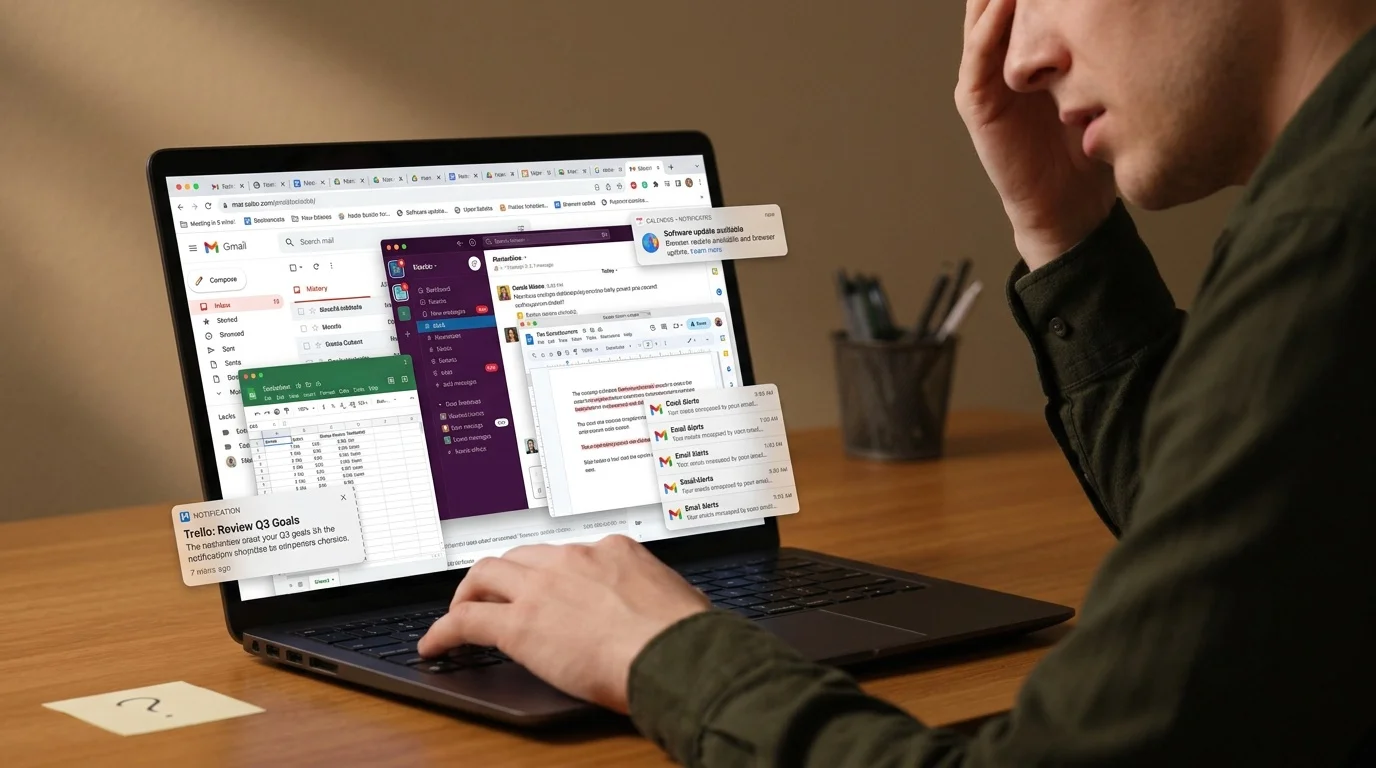
Loona is the most attention-hungry product in this comparison by a wide margin. It roams, it follows you, it learns tricks and it asks to be played with — and it wants the floor, not a corner of the desk. That is exactly what makes it a wonderful pet and a costly housemate if the room is also your office.
The cost in privacy
The third price is the hardest to see and the hardest to undo. Almost every companion robot here carries a camera and a microphone, because that is what makes it feel alive — it recognises faces, follows gestures, answers to its name. What it sees and hears either stays on the device or travels to a company cloud, and only some products make that choice explicit. A device that lives where you work and take calls is a sensor in the room, whatever else it is.
Loona has a camera and a microphone for face tracking, gestures and voice, and its smart features connect to KEYi's cloud. It is a roaming, always-listening device in the space where you work and take calls. There is no subscription, but there is still a company on the other end of it.
Pixl Nub is the exception that proves the point. It has no camera and no microphone — it watches the room with 60 GHz radar, which detects presence, movement and breathing, not faces or words. It can tell that you are at the desk and that you were interrupted. It cannot tell what you said.
Make the most of the 24 hours you get
Two people sit down at the same desk with the same 24 hours. One lets the day happen to them; the other treats their attention as the scarcest thing they own and quietly gets 1% better at spending it. Multiply that by a year and the two are not in the same place.
That second person is who this page is written for. The robots below are genuinely lovely, and there is no judgment in wanting one — they are built to be played with. But they compete for the same hours you are trying to make something of. If you want a friendly thing on your desk and want to compound a little every day, keep reading.
Loona is not really a desk companion — it is a robot dog with wheels that wants the floor and your full engagement. At around $499 it is the most expensive product in this comparison and the one furthest from anything that helps you work, because it is built to be played with, followed and watched. That is not a flaw; it is the product. It is simply the most attention-hungry thing in the category, which makes it the sharpest version of the question this page asks: what do you want the object in your room to do for you?

Why people look past Loona
Loona is the best-liked product in this comparison and the most expensive. It is also the one people most often buy by mistake, because they searched for a desk companion and found a robot dog.
And Loona does not just sit on a desk. It roams the room, follows you, learns tricks and asks to be played with — it is the most attention-hungry thing here by a wide margin. That is exactly what makes it a wonderful pet and, if your desk is where you do deep work, a costly housemate.
So this page splits cleanly in two. If you want a robot pet, Loona is a good one and everything below is a downgrade — stay with it. If you wanted something on your desk, the alternatives are cheaper, smaller, and none of them need floor space.
Loona at a glance
| Price | ~$499 standard |
|---|---|
| Subscription | None |
| Mobility | Roams the room |
| Battery | ~2–4 hours |
| Form factor | Robot dog on wheels |
| Desk-sized | No |
| Respects your time | No — it wants to play |
If you wanted a desk companion
EMO — $279, the closest to a Loona in personality
EMO is the product most people actually wanted when they clicked on Loona. It has a strong personality, expressive faces, ChatGPT conversation, and a camera for face recognition — and it stays on the desk rather than roaming a room. No subscription.
What you give up: real mobility and floor presence, and about two hours of battery life. EMO is a desk presence, not a pet that follows you.
Eilik — $169.99, for a companion you never think about
Eilik is the least demanding option here: offline, app-free, no subscription, and around eight to ten hours per charge. It is the cheapest credible desk companion, the most durable, and the calmest — it will not follow you around asking for attention.
What you give up: conversation and movement, both of which Loona has in quantity.
AIBI — around $199, pocket-sized
The middle ground between Eilik's simplicity and EMO's capability, and small enough to move between desks. No subscription.
Vector 2.0 — $199.99, cheap to buy and expensive to own
The only product in this comparison with a recurring fee. Vector's voice and ChatGPT features require $11.99/month or $99.99/year, which takes its three-year cost past $500 — more than EMO, and closer to Loona than its sticker suggests.
The honest part
Anyone who genuinely wanted a robot dog should buy the robot dog. Loona is well made, well liked, and it does a job none of the desk robots do. But this page exists because a lot of people who searched for Loona were not, in the end, shopping for a pet.
Pixl Nub is what they tend to want instead. It is a desk robot with a face of its own that takes up a corner of the desk rather than the whole room, and instead of asking for your attention it reports on it: focus session length, interruption count, refocus time, and contactless heart rate and breathing from across the desk, via 60 GHz radar. No camera, nothing to wear, nothing to charge.
One is company. The other is a mirror. Loona takes your hours; Nub is the desk robot for the person who wants to make the best of the few they get — and still have something friendly sitting on the desk.
The full comparison matrix
| Device | Price | Subscription | 3-yr total | Moves? | Battery | Attention cost | Privacy | Measures focus? | Yours if cancelled? |
|---|---|---|---|---|---|---|---|---|---|
| EMO | $279 | None | $279 | Walks on the desk | ~2h | High — walks, talks, reacts | Camera + mic always on | ✗ | ✓ fully |
| EMO Go Home | $369 | None | $369 | Walks + self-docks | ~2h | High — walks, talks, reacts | Camera + mic always on | ✗ | ✓ fully |
| Vector 2.0 | $199.99 | $11.99/mo · $99.99/yr | $499.96 | Roams the desk | ~1–2h active | Highest — roams + answers | Camera + mic → cloud | ✗ | ✓ device; voice + AI stop |
| Eilik | $169.99 | None | $169.99 | Stays put | ~8–10h | Low — silent, stays put | None — fully offline | ✗ | ✓ fully |
| Loona | $499 | None | $499 | Roams the room | ~2–4h | High — follows & plays | Camera + mic | ✗ | ✓ fully |
| Jibo | Used only | None (service dead) | — | Stays put | Mains | Medium — dead hardware | Camera + mic (offline) | ✗ | ✓ brick |
| Cozmo | Used only | None | — | Roams the desk | ~1h | Medium — plays with cube | Camera (app abandoned) | ✗ | ✓ app abandoned |
| AIBI | $199 | None | $199 | Pocket / desk | ~5h | Medium — chatty | Camera + mic | ✗ | ✓ fully |
| Pixl Nub (VIP) | $200 | None | $200 | Not worn, not mobile | Mains | Lowest — one quiet look | 60 GHz radar, no camera | ✓ the whole point | ✓ forever |
Prices sourced from vendor websites as of October 2026. Shipping, tax and accessory costs excluded except on the Pixl Nub VIP row, whose $200 is all-in.
Which one is right for you
- You want a robot pet with real presence → Loona. It is well-liked, it has no subscription, and none of the desk robots replace it.
- You want a robot on your desk that talks to you → EMO at $279, or $369 Go Home to have it dock itself.
- You want the calmest, most durable companion → Eilik at $169.99. Offline, app-free, no subscription, and it will not follow you around.
- You want something portable → AIBI around $199.
- You want a friendly desk robot that helps you make the most of your hours → a companion robot will never do that. That is what we built Nub for, and it is $200 all-in with nothing recurring.
FAQ
Is there a cheaper alternative to Loona?
Yes, and if you wanted a desk companion rather than a robot dog you should look at them first. Eilik ($169.99) is the cheapest no-subscription desk companion; EMO ($279) is the full talking, walking desk robot; AIBI ($199) is a pocket-sized middle ground. All three stay on a desk and none of them charge a subscription.
Does Loona have a subscription?
No. Loona is sold as a one-time purchase with no recurring fee, which is unusual at its price point and worth noting — it is one of the reasons it shows up in "robot without subscription" searches.
Is Loona a desk robot or a floor robot?
A floor robot. Loona is designed to roam a room on wheels, follow people, and be played with. It has the personality of a pet and the footprint of one. If you searched for a desk companion and found Loona, the products that actually live on a desk are EMO, Eilik, Vector 2.0 and AIBI.
What is the best robot pet for adults?
It depends what you want from it. Loona is the most pet-like and the most expensive at around $499. EMO at $279 is far more of a characterful desk presence than a pet. Eilik at $169.99 is the least demanding and the most durable. None of them is a substitute for the thing all of them skip: telling you where your working day actually went.
Do desk companion robots help with productivity?
Not on their own — and this is the honest gap in the whole category. Every robot on this page is a reaction and personality product with no concept of a focus session or an interruption. If your goal is output rather than company, you want a measurement tool, not a companion.
Is Pixl Nub an alternative to Loona?
It is the other way to spend a similar amount on something that lives near your desk. Pixl Nub is a contactless focus and interruption tracker with a face of its own — it measures focus sessions, interruptions and refocus time from across the desk via 60 GHz radar, with no camera and nothing to wear. It is for people who looked at a robot dog and realised what they actually wanted was to stop losing hours to interruptions.
Is a desk robot like Loona a distraction?
Loona is the most distracting product in this comparison, by design. It roams, follows you, learns tricks and asks to be played with — which is exactly what makes it a great pet and a poor colleague. If your desk is where you are trying to do deep work, this is the one to be most deliberate about.